Travel Tech · Age Tech · Social2019 – 2020
Freebird Club
Redesigning a social travel platform for people over 50, with a focus on trust, accessibility, mobile use, and human connection.

At a glance
- Problem
- The platform needed to support older hosts and guests who wanted safe, social travel, but the existing experience carried assumptions about age, technology use, and booking behavior.
- What I owned
- Lead Product Designer responsible for research synthesis, responsive redesign, trust-building flows, and accessibility-minded interaction patterns.
- Leadership move
- Made the product people-first instead of booking-first, including profile clarity, explanatory copy, and a Buddy feature for trusted moderation and support.
- Outcome
- Improved the mobile experience, challenged incorrect age-related assumptions, and created a clearer path for hosts and guests to build trust before booking.
Problem Statement
Redesign
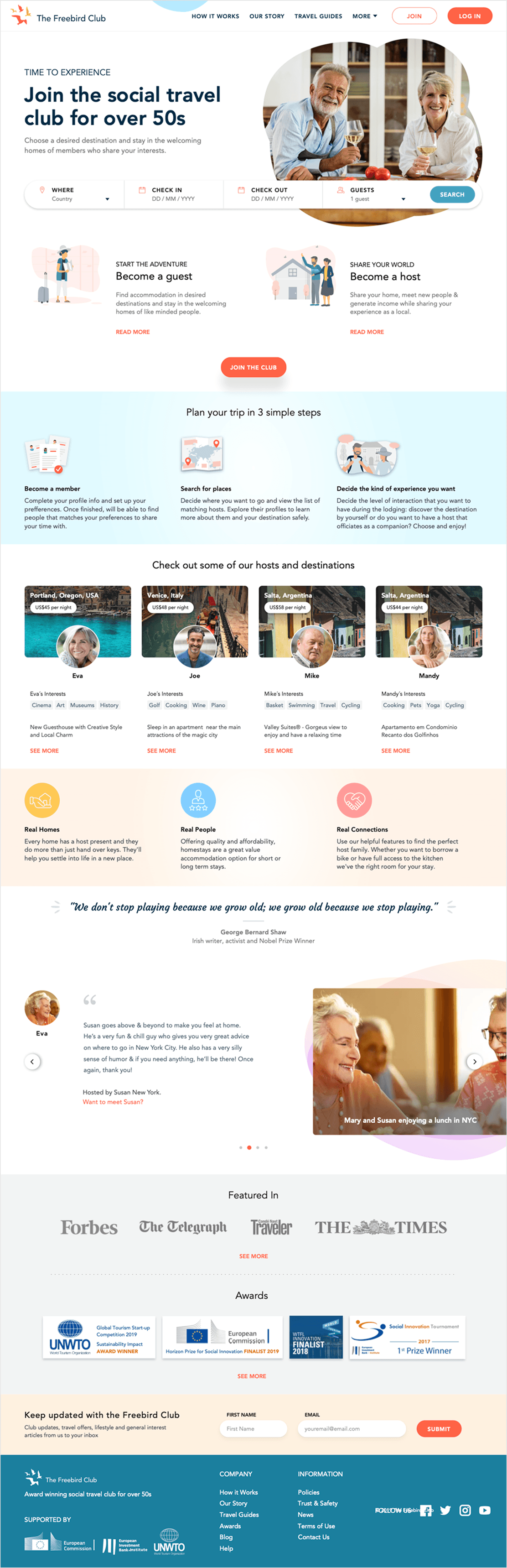
Freebird Club addresses the problem of social isolation among older adults while also enabling affordable travel. It is a peer-to-peer travel and homestay platform specifically for people aged 50 and above, allowing members to stay with each other and build connections.
For example, a retired individual who wants to explore new places but also meet like-minded people can use Freebird Club to find affordable and friendly accommodation with hosts of a similar age group, turning travel into a social experience.
Research
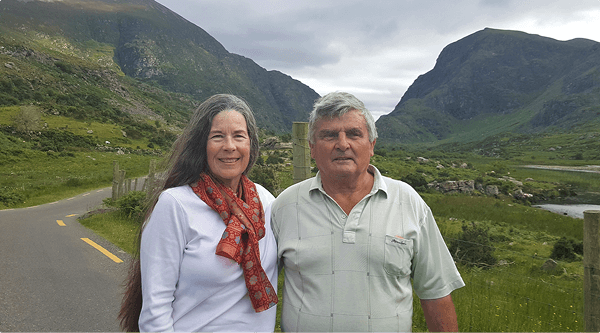
The Freebird Club began in County Kerry, Ireland, when Peter Mangan saw how hosting older guests enriched his retired father Owen’s life, bringing joy and new friendships through shared activities like pub visits and sightseeing. Inspired by these meaningful connections, Peter launched the Freebird Club in 2017 as a social homestay platform exclusively for people over 50.
The initiative quickly gained recognition, winning major innovation awards and growing into a thriving global community that fostered social interaction and companionship among older adults.

Wireframes
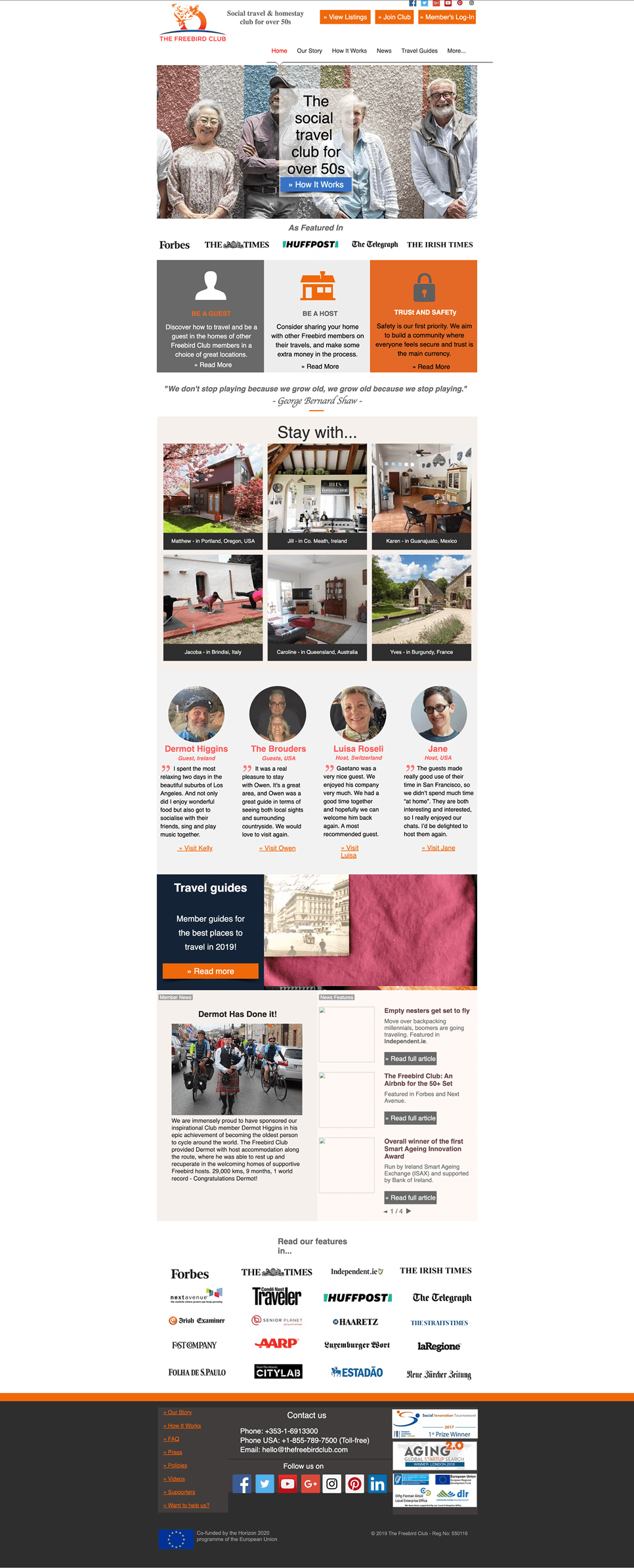
The existing data revealed that only a small number of users accessed the website on their mobile devices. During user interviews, many participants stated they preferred using the website on their computers. A key reason for this preference was that the existing website was not responsive, and several features were unavailable on mobile.
However, after launching the new design, which prioritised responsiveness, mobile traffic saw a significant increase. Both hosts and guests provided positive feedback, praising the improved mobile experience.
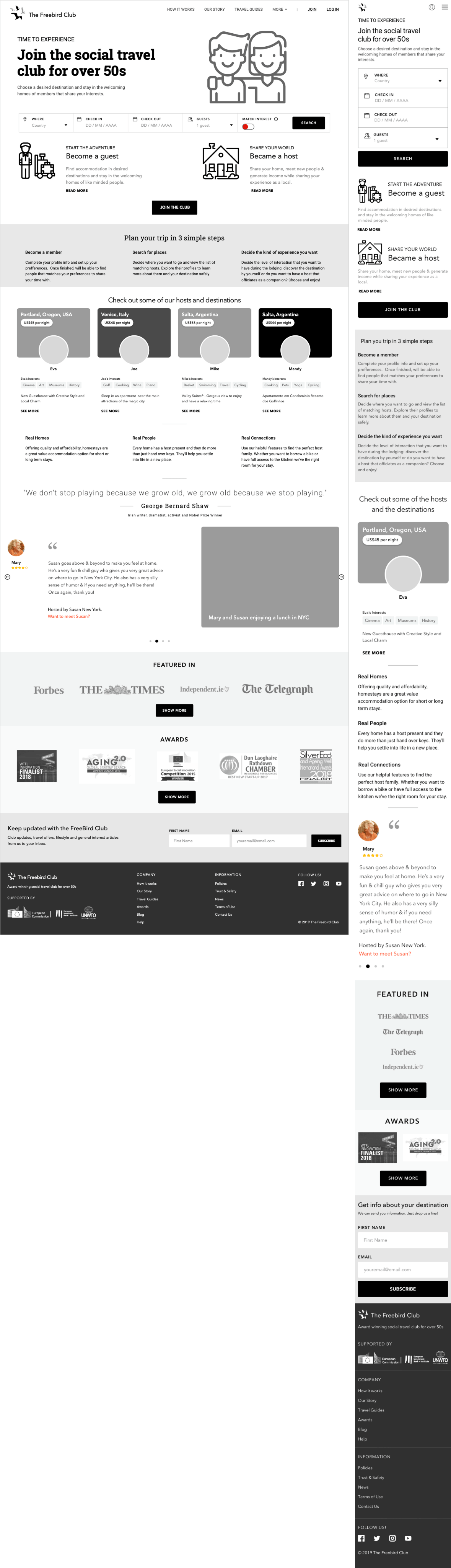
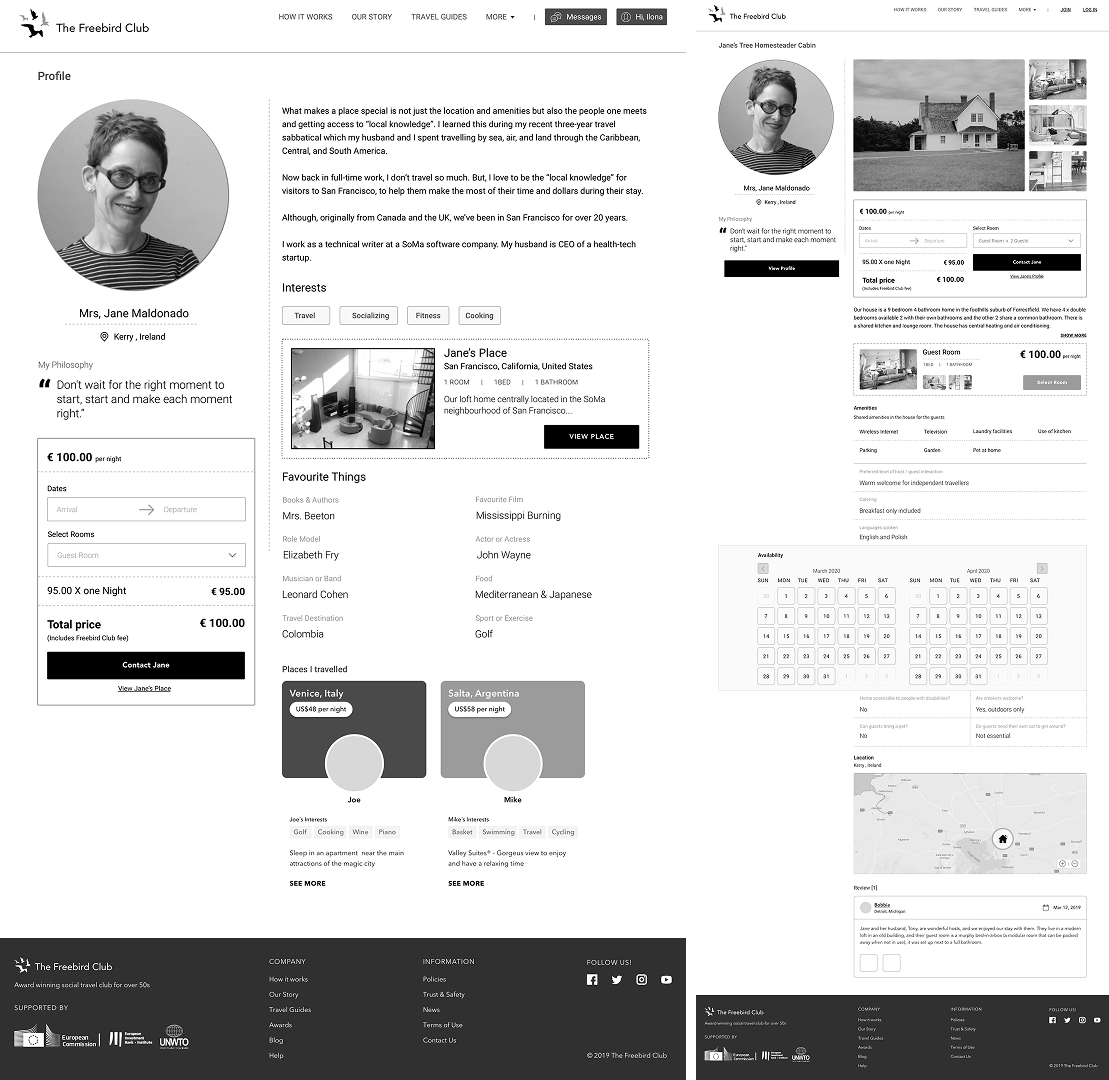
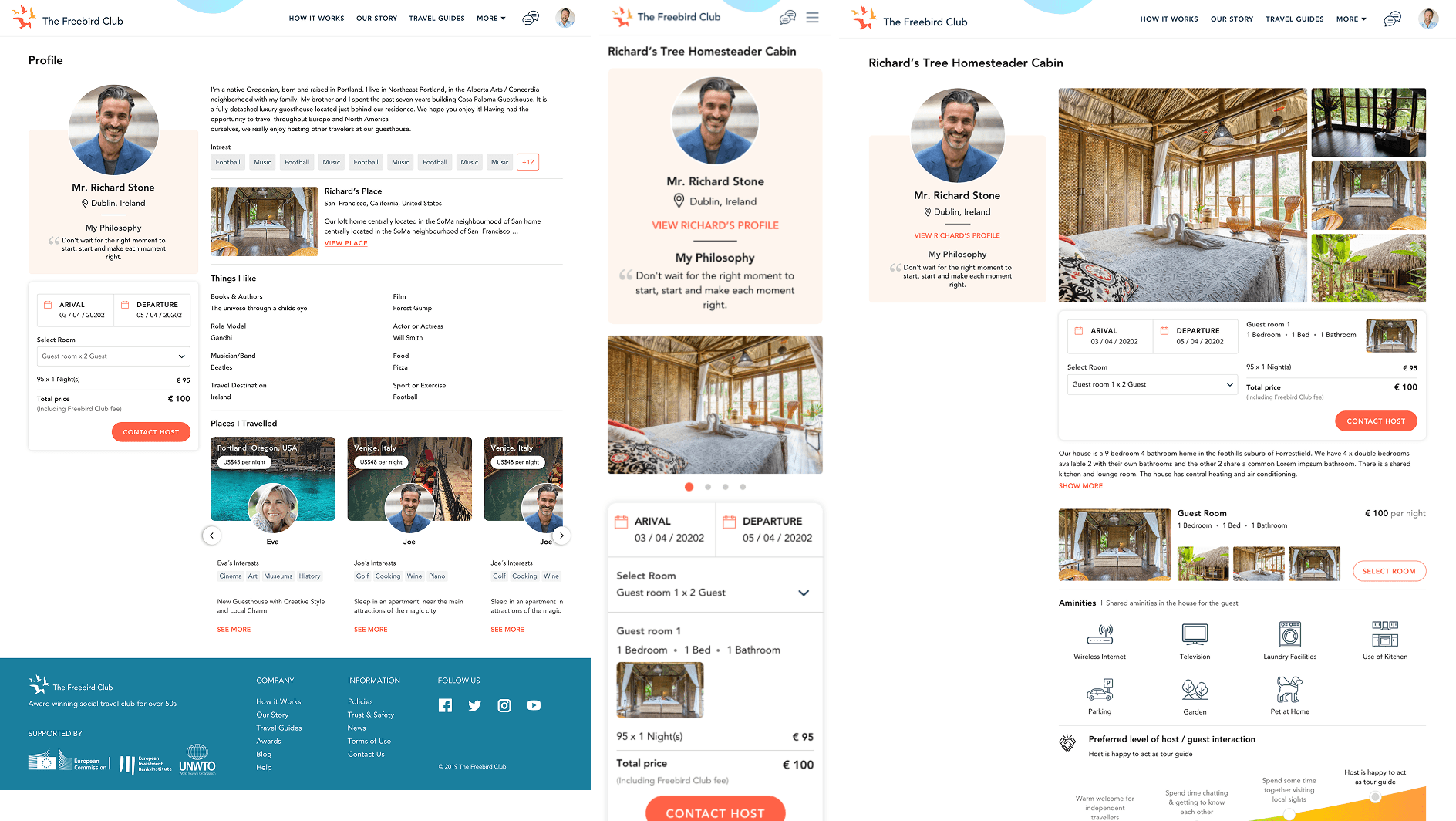
From the outset, it was clear that our goal was not to build a traditional travel booking platform but a people-first platform. The booking process was intentionally made secondary to understanding the person.
Emphasis was placed on ensuring that hosts and guests felt a mutual connection and shared common interests. Only after establishing this rapport would users proceed to explore property details and finalise their booking.
Ideation
During our interactions at the club, we discovered that while everyone was familiar with using computers, email, and similar tools, many did not use them regularly. Some members, for example, checked their email only once a week or even once a month. Since the platform allows users to invite strangers into their homes, there were understandable concerns about safety and trust.
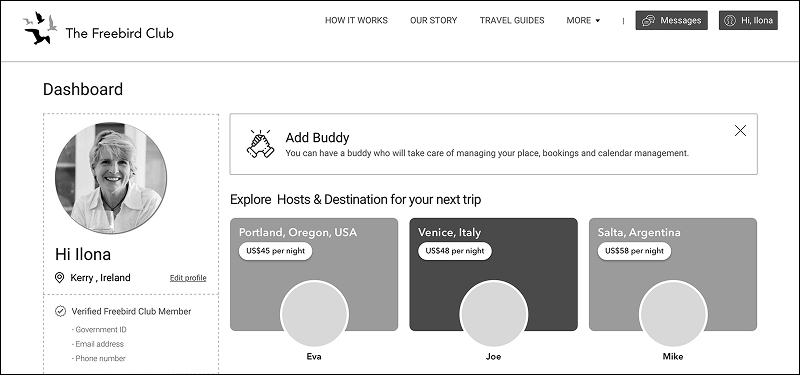
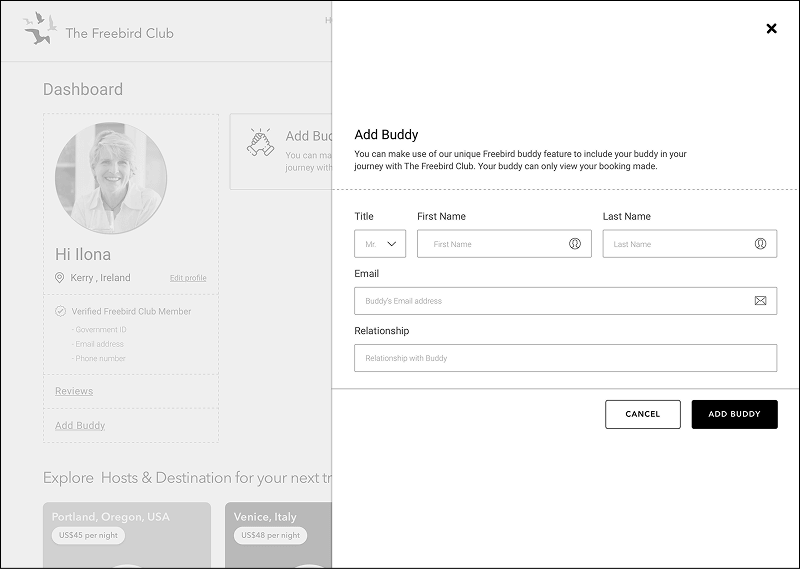
To address this, we introduced a “Buddy” feature. This feature enables hosts to add a trusted moderator to their profile, who can manage guest requests, respond to inquiries, and oversee bookings and the calendar on their behalf.
Final Solution
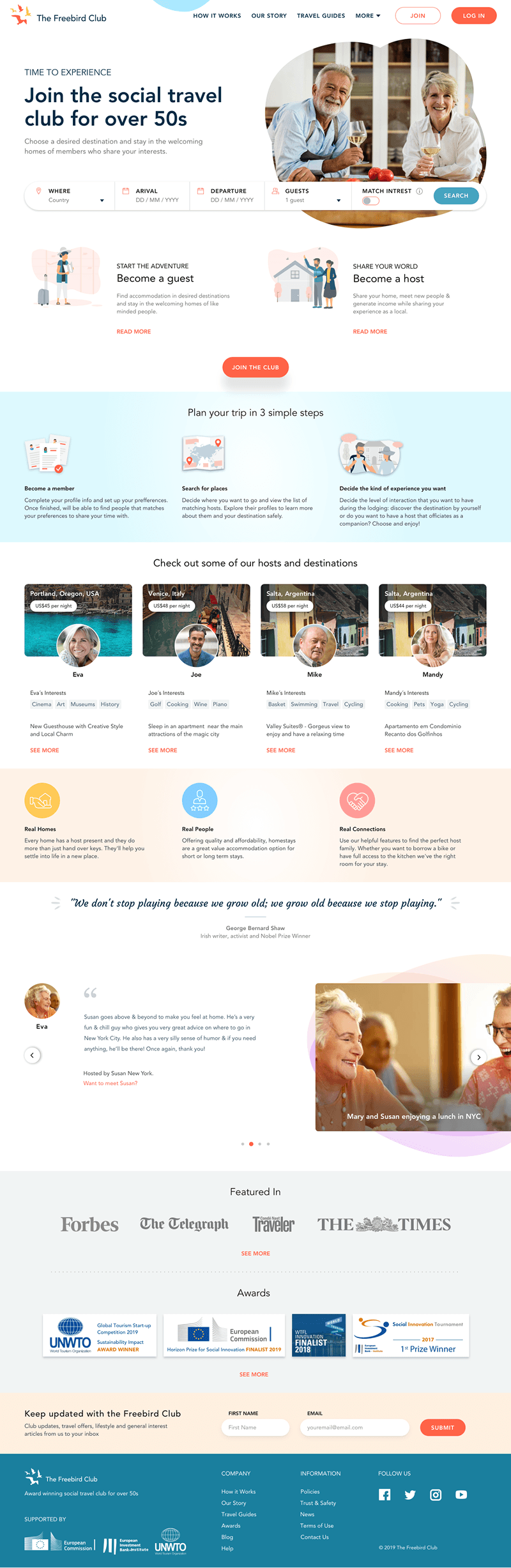
Every element was thoughtfully designed and given meticulous attention. Each new section included a concise one-liner to clearly explain its purpose, ensuring users could quickly understand it. Even when it seemed like there was too much text on the screen, the feedback was overwhelmingly positive, with users appreciating the clarity and ease of understanding.
By focusing on essential features and eliminating unnecessary clutter, we created a streamlined and user-friendly experience.
Reflection & Learning
Avoid working with assumptions, as they can often lead to incorrect conclusions. For example, the notion that people over 50 don’t use the internet is simply untrue they do, and often with confidence. They enjoy comfortable travel and actively seek out opportunities to explore new experiences.
While some might believe they struggle with filling out lengthy forms, the reality is that many in this age group take the time to carefully provide detailed information and are open to sharing their thoughts when given the opportunity. Understanding their preferences requires genuine engagement, not stereotypes.